 CYGURU
First-edition editorial collection complete: 40 of 40 planned sights published. Published destinations: Rome, Florence, Venice, Milan, Naples, Pisa, Lucca, Monterosso al Mare, Vernazza, Manarola, Riomaggiore, Palermo, Agrigento, Taormina, Etna — Nicolosi base. Published guides are not live availability; check each operator for closures and access. Further collections will be added after source and photograph review.
Choose a destination
Rome →Florence →Venice →Milan →Naples →Pisa →Lucca →Monterosso al Mare →Vernazza →Manarola →Riomaggiore →Palermo →Agrigento →Taormina →Etna — Nicolosi base →Places worth exploring
Editorial selection · no visitor popularity score is implied.
Browse six places at a time. Choose a destination or use the filters to narrow your selection.
 Formermanas · Source · CC BY-SA 4.0
Colosseum
Look beyond the famous silhouette: the Colosseum is a surviving system of arches, circulation routes and performance spaces. Choose the access category you actually want before planning the surrounding archaeological day.
Explore this place ↗ SAB983 · Source · CC BY-SA 4.0
Roman Forum
Explore the civic landscape of ancient Rome through temples, ceremonial monuments and the spaces between them. The Forum rewards a readable route more than a rapid sequence of unidentified ruins.
Explore this place ↗ Jensens; brightness adjustment by Rjdeadly · Source · Public domain — author release
Palatine Hill
Climb from the Forum’s civic landscape into the setting of imperial residences. Palatine Hill combines archaeology, gardens and changing views, with separate access conditions for some interiors.
Explore this place ↗ Van Der Meulen Christofle · Source · CC0 1.0
Pantheon
Move from a columned portico into one of Rome’s most memorable interiors. The Pantheon is both an ancient monument and an active basilica, so a sightseeing visit must respect its religious use.
Explore this place ↗ Kurt Kaiser · Source · CC0 1.0
Trevi Fountain
See the theatrical meeting of water, rock and palace façade, then decide whether to enter the controlled inner perimeter. Viewing the fountain and approaching the basin are different visitor experiences.
Explore this place ↗ HSwaff · Source · CC BY-SA 4.0
Piazza Navona
Explore an elongated Baroque square whose shape preserves the footprint of an ancient stadium. Read it through its fountains, façades and long perspectives rather than as a single photo stop.
Explore this place ↗ Alessio Damato (Alejo2083) · Source · CC BY-SA 3.0
Galleria Borghese
A focused art visit inside a richly decorated villa, with paintings and sculpture competing for attention. Reserve the museum visit first and plan any surrounding park walk separately.
Explore this place ↗ © Vyacheslav Argenberg / www.vascoplanet.com · Source · CC BY 4.0
Baths of Caracalla
Explore the scale of an imperial bathing complex through immense surviving walls, room sequences and mosaic details. This is an archaeological visit, not an operating spa or a guaranteed performance venue.
Explore this place ↗ Dllu · Source · CC BY-SA 4.0
Florence Cathedral complex
Treat Piazza del Duomo as a collection of different visits: the cathedral, dome, bell tower, baptistery and museum do not share one simple access arrangement. Choose the parts you actually want before reserving a climb.
Explore this place ↗ Andrzej Otrębski · Source · CC BY-SA 4.0
Uffizi Gallery
Build a focused art visit inside the Uffizi rather than trying to collect every famous painting. The architecture, corridors and ancient sculpture matter alongside the Renaissance works.
Explore this place ↗ Clara Polo Sabat · Source · CC BY-SA 4.0
Accademia Gallery
See Michelangelo’s David in its museum setting and allow time for the surrounding collection. An encounter with the original inside the Accademia differs from seeing a replica in a public square.
Explore this place ↗ Clara Polo Sabat · Source · CC BY-SA 4.0
Palazzo Vecchio
Read Florence’s civic history through its palace, decorated rooms and setting on Piazza della Signoria. Museum interiors, the tower and special routes are separate planning decisions.
Explore this place ↗ Diego Delso, delso.photo · Source · CC BY-SA 4.0
Boboli Gardens
Explore a designed landscape behind Pitti Palace, with sculpture, grottos and changing levels. Choose a realistic garden route rather than treating Boboli as a flat shortcut through the city.
Explore this place ↗ Hein56didden · Source · CC BY-SA 4.0
Ponte Vecchio
Understand the bridge both as a crossing of the Arno and as a row of buildings suspended above it. A walk across Ponte Vecchio and a visit to the elevated Vasari Corridor are different experiences.
Explore this place ↗ Ninataraxia · Source · CC0 1.0
St Mark’s Basilica
Approach San Marco as an active cathedral and a complex of distinct visitor spaces. The basilica interior, Pala d’Oro, museum, loggia and bell tower are not interchangeable admission choices.
Explore this place ↗ Didier Descouens · Source · CC BY-SA 4.0
Doge’s Palace
Explore the setting of Venetian government through the palace’s courtyard, institutional rooms and changing visitor route. Separate the regular museum visit from the limited special itineraries.
Explore this place ↗ Stavros Argyropoulos · Source · CC BY-SA 4.0
Rialto Bridge
See Rialto both as a crossing and as a viewpoint over the Grand Canal. Its shop-lined stone arch belongs to the commercial landscape around the market, not an isolated monument on an empty waterfront.
Explore this place ↗ Mgimelfarb · Source · CC BY-SA 4.0
Grand Canal
Use Venice’s main waterway to understand the city’s scale, palace fronts and crossings. A public-transport journey, a private boat service and a guided sightseeing cruise are different products.
Explore this place ↗ Inocybe / piero d’Houin · Source · CC BY-SA 3.0
Murano
Plan Murano as a lagoon excursion with canals, glassmaking heritage and a separately managed museum visit. Choose the landing stop and return connection before deciding how much to fit into the day.
Explore this place ↗ Skarkkai · Source · CC0 1.0
Milan Cathedral — Duomo
Experience the cathedral at different scales: marble details from the square, a vast interior and a separate route among the roof’s spires. Choose the areas and access option that match the visit you want.
Explore this place ↗ Meri Valenti (TCI) · Source · CC BY 4.0
Sforza Castle
Explore the castle as both a fortified civic landmark and a home for museum collections. A courtyard walk and a visit to the museums are different activities with different access conditions.
Explore this place ↗ Hermes from mars · Source · CC BY-SA 3.0
Pinacoteca di Brera
Visit Brera with a few paintings in mind and enough time to encounter others. The surrounding palazzo and district provide context, while entry to the gallery follows the museum’s own reservation arrangements.
Explore this place ↗ Dimitris Kamaras · Source · CC BY 2.0
Leonardo’s Last Supper
Prepare for a short, controlled encounter with Leonardo’s wall painting in the refectory at Santa Maria delle Grazie. Reservation and arrival procedures are central to this visit, not optional extras.
Explore this place ↗ Phyrexian · Source · CC BY-SA 4.0
National Archaeological Museum of Naples — MANN
Connect the excavated cities around Vesuvius with the art and objects preserved in Naples. Choose a collection focus rather than attempting every room in one continuous circuit.
Explore this place ↗ Velvet · Source · CC BY-SA 3.0
Cappella Sansevero
Build a focused art visit around the Veiled Christ, then look beyond its fame to the chapel’s other sculptures. Advance booking and the museum’s photography rules shape the experience.
Explore this place ↗ Commonists · Source · CC BY-SA 4.0
Pompeii Archaeological Park
Explore a Roman city through streets, public spaces and domestic remains. Pompeii is an excursion from Naples, not a city-centre stop; choose the entrance and walking scope before travelling.
Explore this place ↗ Sumit Surai · Source · CC BY-SA 4.0
Herculaneum Archaeological Park
Encounter the remains of ancient Herculaneum within modern Ercolano. Treat this as a separate excavation visit with its own ticket, route and return journey, even when staying in Naples.
Explore this place ↗ The Dronaut · Source · CC BY-SA 4.0
Vesuvius — Gran Cono
Plan the Gran Cono as a mountain visit with its own admission and weather decisions. Seeing Vesuvius from Naples is different from reaching and walking the crater route.
Explore this place ↗ Joseolgon · Source · CC BY-SA 4.0
Leaning Tower of Pisa
See the tower from the cathedral square, then decide whether the reserved stair climb suits your visit. Exterior viewing and admission to the tower are different experiences.
Explore this place ↗ AndreCollodi · Source · CC BY-SA 4.0
Lucca City Walls
Discover the defensive ring as an elevated urban park. Choose a short section or a longer circuit, then connect it with the historic streets below.
Explore this place ↗ Lucarelli · Source · CC BY-SA 3.0
Guinigi Tower
Climb towards a tree-crowned terrace above Lucca’s rooftops. The distinctive hanging garden is reached by stairs; plan its effort and reserved access independently from a city walk.
Explore this place ↗ Benjamin Smith / Wikimedia Commons · Source · CC BY-SA 4.0
Monterosso al Mare
Discover Monterosso through its coastal setting and contrasting village spaces. Keep a relaxed seafront visit separate from a decision to hike towards another Cinque Terre village.
Explore this place ↗ 29C · Source · CC BY-SA 4.0
Vernazza
Explore the compact coastal settlement at street level, then treat any elevated trail viewpoint as a separate walking decision. A famous panorama is only one part of the visit.
Explore this place ↗ DV · Source · CC BY-SA 4.0
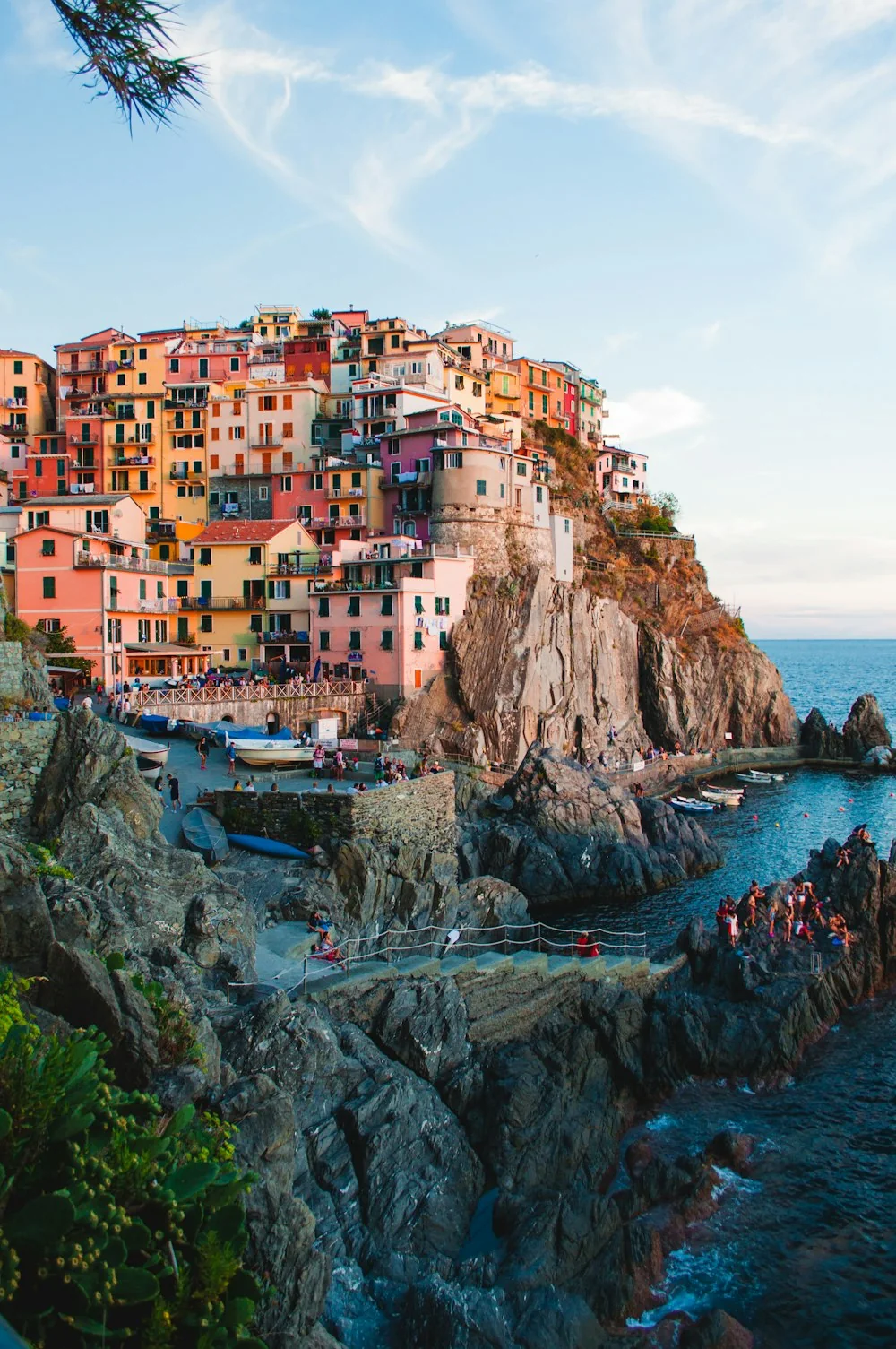
Manarola
Look at the relationship between colourful buildings, rocky coast and cultivated slopes. Plan a village visit independently of the reserved Via dell’Amore connection and the steeper inland paths.
Explore this place ↗ Valer637 · Source · CC BY-SA 4.0
Riomaggiore
Explore a coastal village at different levels, from its built slopes to its waterfront setting. Reserve any Via dell’Amore visit separately and allow time for the walk to the correct entrance.
Explore this place ↗ Julian Lupyan · Source · CC0 1.0
Palermo Cathedral
Distinguish the cathedral as a living place of worship from the separately managed monumental visitor routes.
Explore this place ↗ Christian Campe · Source · CC BY-SA 3.0
Palatine Chapel
Explore the chapel within Palermo’s Royal Palace, giving its mosaics and architectural setting their own focused visit.
Explore this place ↗ Berthold Werner · Source · CC BY-SA 3.0
Valley of the Temples
Plan a landscape-scale archaeological visit near Agrigento rather than treating the temples as a quick city-centre stop.
Explore this place ↗ Berthold Werner · Source · CC BY-SA 4.0
Ancient Theatre of Taormina
See the theatre as both an archaeological monument and a carefully positioned encounter with the surrounding landscape.
Explore this place ↗ Andrzej Otrębski · Source · CC BY-SA 4.0
Mount Etna
Choose an Etna experience by route, altitude and current access conditions. A distant landscape view and a mountain excursion are different activities.
Explore this place ↗No places match. Try another search.
About Italy
Explore Italy through archaeology, art, historic cities and regional landscapes. Discover the published destination collections below, with documented photographs and practical visitor checks, as the atlas expands through reviewed releases.
Destinations to begin with
Rome · Florence · Venice · Cinque Terre
One country, distinct kinds of journey
Italy connects archaeological cities, art collections, coastal settlements and mountain landscapes. Choose a small number of regions for the time available. Published guides appear by destination below; the 40-place first edition expands in reviewed batches.
Organise visits around fixed reservations
Put the museum or archaeological visit that requires a reservation into the itinerary first, then build flexible city walks around it. A transfer between cities, arrival at a station and arrival at an attraction entrance are separate stages. No intercity journey time is guaranteed by this atlas.
Understand the map and the collection
The city maps use locality reference points. Each attraction page links to a place search and the responsible visitor authority. Vatican City is a separate country: a trip based in Rome may include it, but it is not counted among Italy’s published sights.
Money, time and everyday planning
Italy uses the euro. The converter gives indicative provider rates rather than a guaranteed bank or card rate. Local time follows Europe/Rome, including seasonal clock changes. Keep enough flexibility for meals, transfers and the final entrance check.
Match the route to the season
A city art itinerary, an exposed archaeological walk, an Alpine visit and a coastal journey need different preparation. Use the local forecast for your actual destination and check attraction access separately. Climate guidance cannot establish whether a path, ferry or monument is operating.
Official entry and visitor sources
Use Italy’s Ministry of Foreign Affairs Visa for Italy service for a check matched to nationality, residence, travel purpose and duration. Confirm the result with the responsible consulate and check transit requirements separately. This page does not issue a personalised visa decision.