 CYGURU
In photographs 3 Photographs
Documented photographs from different dates. Open an image to browse the gallery and its original source.
 Enlarge photo ↗

 Enlarge photo ↗

 Enlarge photo ↗

In this guide · 6 sections
Understand the valley
The Forum developed into a centre of public life after the valley was reclaimed in antiquity. Its surviving buildings belong to different periods and functions: political activity, religion, commerce and public display occupied overlapping ground.
Treat the site as an evolving city centre. Changes of level, reused structures and incomplete monuments are part of the evidence, rather than gaps that a single photograph can resolve.
Give the walk a few visual anchors
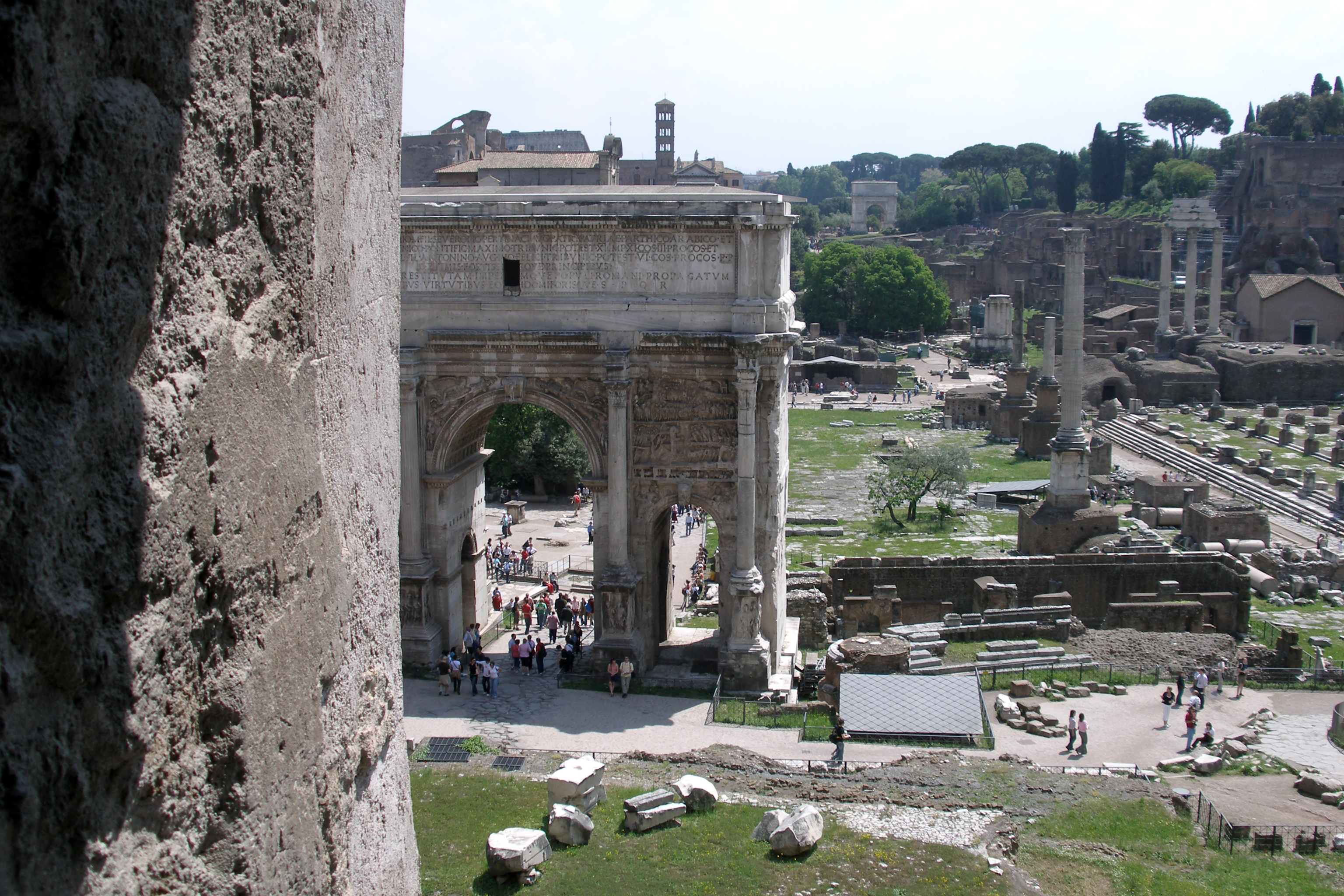
The park identifies the Arch of Septimius Severus, the Temple of Antoninus and Faustina and the Basilica of Maxentius among the monuments that help structure a visit. Choose a few landmarks and read their positions in relation to the wider valley.
Compare an arch, a temple and a basilica before adding more names. This editorial approach makes differences in scale and function easier to remember without requiring you to identify every surviving foundation.
Connect it with the Palatine carefully
The Forum and Palatine form a connected archaeological area, while the Colosseum has its own admission arrangements. Check the official conditions on your chosen ticket, particularly entry validity and any included special sites.
Plan the sequence before entering. Returning to a distant gate or leaving for lunch can affect what you are able to do next; do not assume unlimited re-entry or identical operating hours across the park.
Terrain and visitor checks
Expect an outdoor archaeological walk rather than a uniformly level pavement. Where mobility, pushchairs or limited stamina affect the route, obtain current advice from the park’s accessibility service before committing to a full circuit.
Use the official visitor map to identify an entrance, not simply a map pin in the middle of the ruins. Historical gallery photographs show context, not a guaranteed open path.
Plan the actual visit
Check opening, admission, access needs and the correct entrance with the official visitor source. Historical photographs do not establish current conditions.
Visitor information ↗Find on a map ↗