 CYGURU
In photographs 1 Photograph
Documented photographs from different dates. Open an image to browse the gallery and its original source.
 Enlarge photo ↗

NPS: Palace of Fine Arts historical context ↗
In this guide · 6 sections
Architecture in a landscape
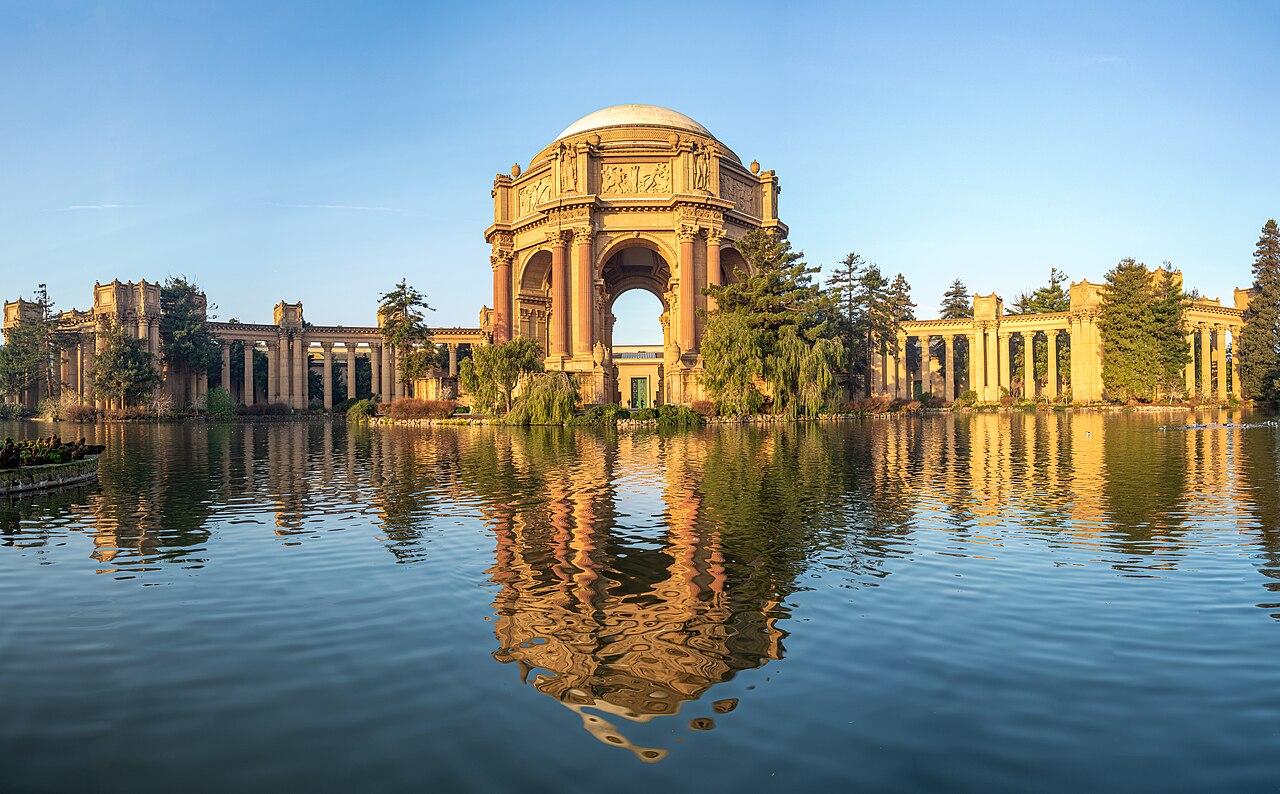
The Palace’s rotunda and colonnades create a distinctive relationship with the lagoon. Walk slowly enough to see the structure from different public approaches rather than treating it as one fixed photo position.
NPS and the city connect the site with the 1915 Panama-Pacific International Exposition. The surviving visitor setting is best understood as an architectural landscape rather than a conventional art-collection museum.
Public grounds and venue events
The park and a theatre performance or private function have different visitor arrangements. Read the actual venue, entrance and programme on any event ticket.
Public use, maintenance and reserved activity can affect parts of the site. The city’s facility page includes improvement notices; confirm the relevant dates rather than assuming an older notice describes today.
A compact Marina-area priority
Choose a manageable public-ground visit with a local pause. A bridge outing can be a separate stage when its approach and transport work; the two landmarks do not share one entrance.
Respect functions, barriers and other visitors. A public setting can remain in everyday use while being popular for photographs.
Light, weather and a practical approach
The lagoon and columns offer different compositions as light changes, but no photograph guarantees the same conditions on arrival. Preserve safe public paths and the route back rather than pursuing a specific shot at any cost.
For reduced mobility, check the exact path, surface and facilities needed. If conditions or access are unsuitable, shorten the outdoor visit or choose a confirmed indoor priority elsewhere.
Plan the actual visit
Check opening, admission, access needs and the correct entrance with the official visitor source. Historical photographs do not establish current conditions.
Visitor information ↗Find on a map ↗