 CYGURU
In photographs 3 Photographs
Documented photographs from different dates. Open an image to browse the gallery and its original source.
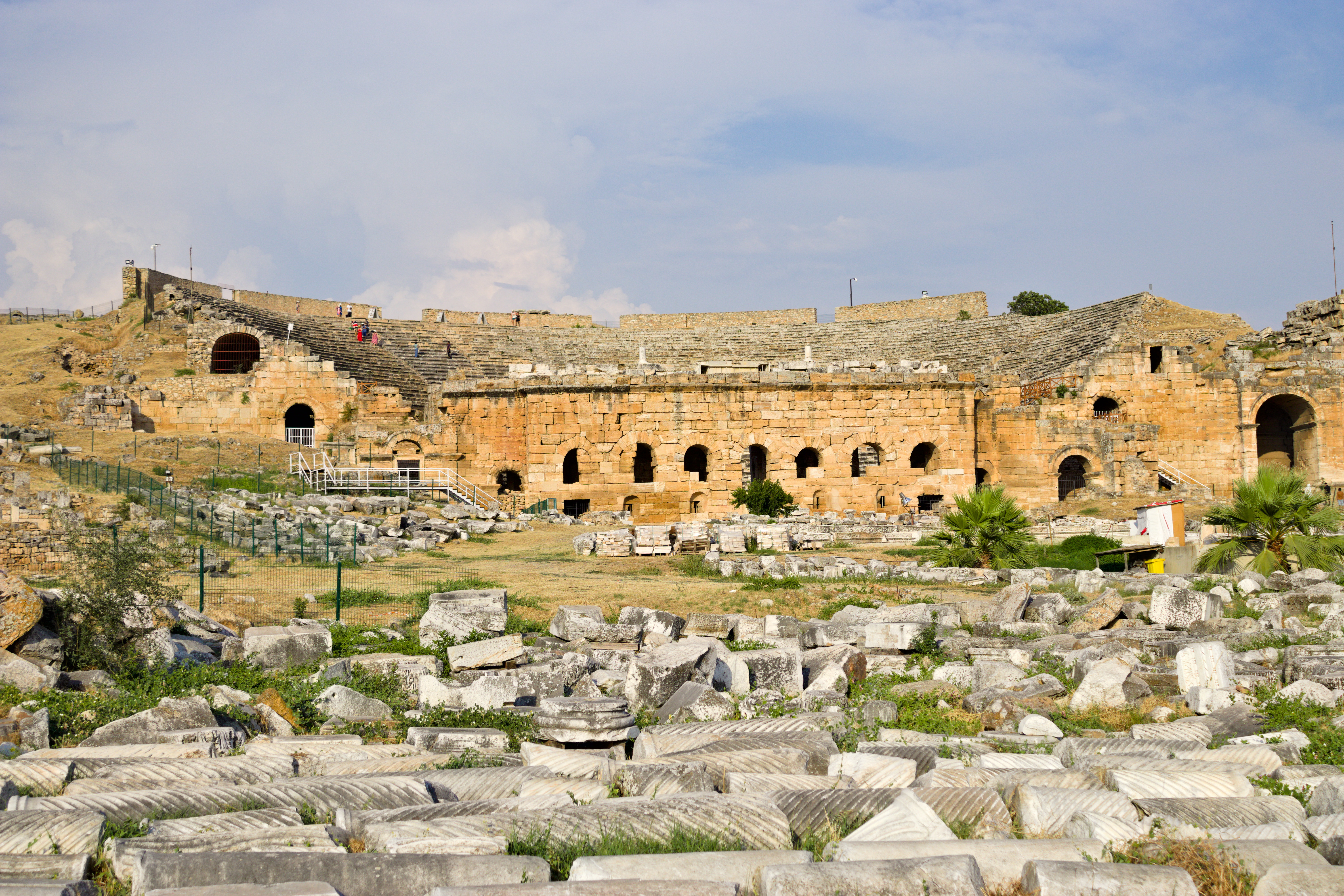 Enlarge photo ↗

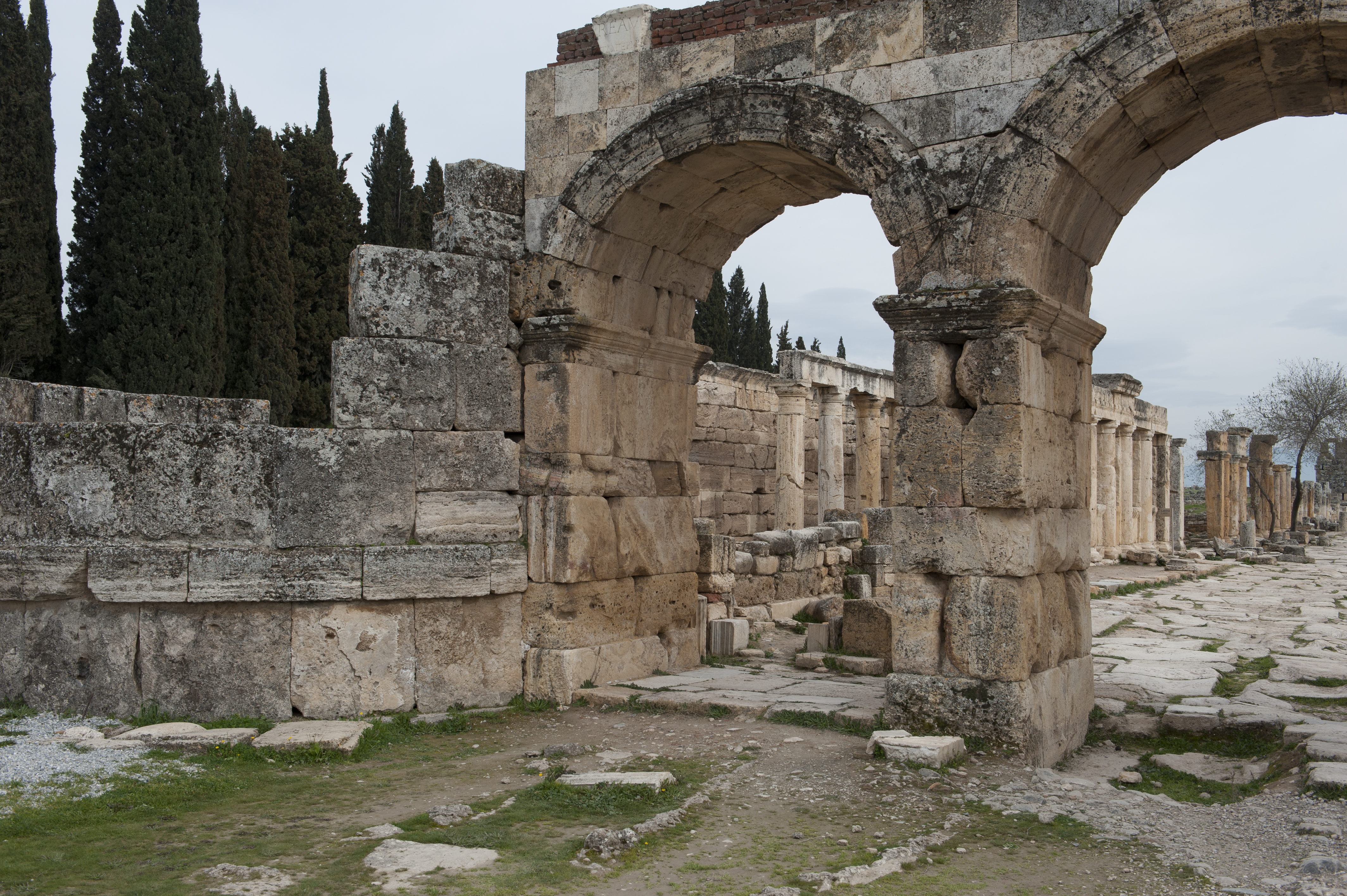 Enlarge photo ↗

 Enlarge photo ↗

Check the named entrance, permitted circuit and current admission scope directly. Museum access and ancient-pool use require separate confirmation. Historical photographs do not show live water levels, opening status or visitor access.
UNESCO: Hierapolis-Pamukkale ↗
In this guide · 6 sections
Read a city associated with thermal springs
UNESCO connects the establishment of Hierapolis with the Attalid dynasty in the second century BCE. The national museum listing identifies a city whose surviving remains are largely Roman. The settlement and the neighbouring travertines form one mixed cultural and natural World Heritage property.
Editorial approach: give the city an identity beyond the white terraces. Compare a public performance building, a street or gateway and a burial area, asking what each reveals about urban life. These are useful viewing themes, not a guaranteed circuit through every monument.
Choose a few monuments to study
The official site description lists the theatre, Frontinus Street, baths, religious buildings and necropolis areas among the archaeological remains. The theatre, gate and necropolis in this gallery provide three different perspectives on the city rather than three separate ticket products.
Editorial viewing suggestion: concentrate on the theatre’s relationship with its setting, then contrast the scale of a gateway with the spaces beyond it. If the burial landscape interests you, allow a separate part of the visit for it instead of adding a distant stop after your energy is already spent.
Separate archaeology, museum and bathing
A walk through the archaeological site, a museum visit and use of the ancient pool are different activities. Check the exact admission inclusions and operating arrangements before deciding what fits your day. This atlas does not certify that a specific pass, combined ticket or tour includes every component.
Editorial planning advice: select the archaeological priorities first, then add interpretation or bathing only after checking their conditions. Keep the named entrance and collection point clear. The official listing has entrance-specific closing cutoffs, so check your intended gate rather than relying on a single general time.
Prepare for an outdoor archaeological visit
Choose a route that suits your mobility and the conditions on the day. Ask about the precise step-free or assisted circuit when needed; a panoramic photograph does not show every gradient, step or uneven surface. Leave enough time and energy for the return to your agreed exit.
The Pamukkale widget gives locality-level outdoor weather, not conditions at each monument or inside a museum. The map is not the theatre entrance or a verified walking track. Historical photographs from 2011, 2014 and 2024 document the site without confirming today’s restoration boundaries or visitor access.
Plan the actual visit
Check opening, admission, access needs and the correct entrance with the official visitor source. Historical photographs do not establish current conditions.
Visitor information ↗Find on a map ↗