 CYGURU
In photographs 1 photograph
Documented photographs from different dates. Open an image to browse the gallery and its original source.
 Enlarge photo ↗

In this guide · 8 sections
Confirm the museum and its address
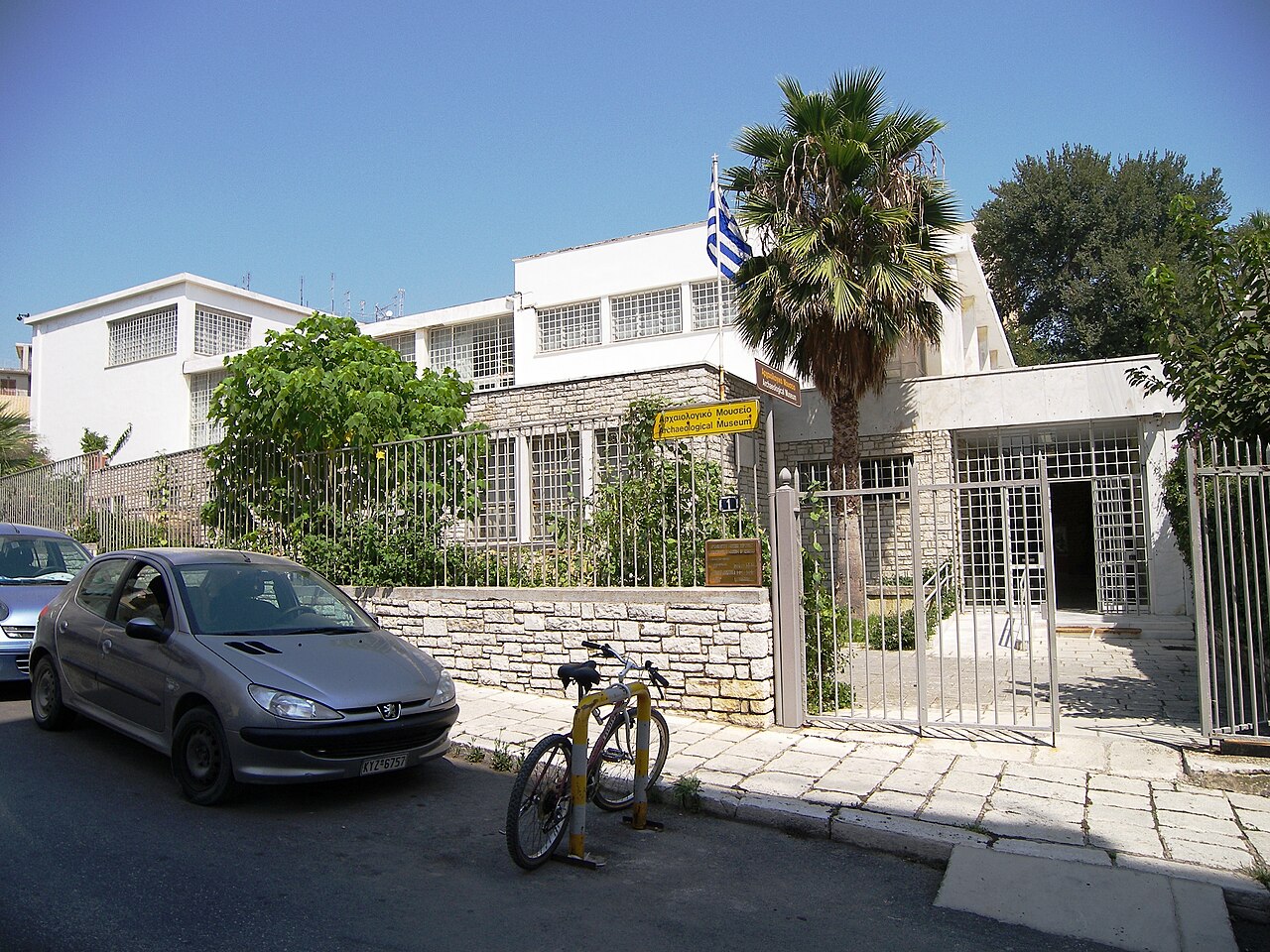
The Archaeological Museum of Corfu, also referred to as the Archaeological Museum of Kerkyra, is at 1 Armeni Vraila Street. It is a separate visit from the Old Fortress and from collections housed within the fortress. Use the full attraction name when checking directions and admission.
The exterior photograph accompanying this guide dates from August 2007, before the museum’s later renovation. Treat it as a historical illustration of the building, not a guarantee of the current entrance arrangement. Follow present signage and the official directions when you arrive.
Start with the island’s chronology
Hellenic Heritage describes a collection covering prehistoric through Roman Corfu, with material connected to the ancient city and the wider island. Begin with the introductory chronology and locate the period of each group you choose to study. Avoid treating all ancient objects as products of the same culture at the same time.
A useful first question is where an object was discovered. Follow that with its date and the interpretation of its use. These details connect the collection to actual places and activities, rather than leaving a sequence of attractive objects detached from their archaeological context.
Give the temple pediment sustained attention
The monumental Gorgon pediment from the Temple of Artemis is a principal highlight. Begin at a position from which the composition can be understood as a whole, then move closer where permitted to study selected details. Read the explanation of its original architectural setting before interpreting individual figures.
Remember that a pediment belonged to a building and was encountered differently from a museum display at close range. Ask how shape, scale and arrangement influence what you notice. Distinguish surviving sculpture from explanatory reconstruction, and avoid assuming that every missing portion can be restored with certainty.
Balance the monument with smaller evidence
After looking at the pediment, select a smaller object that raises a different question about ancient life. Compare its material, scale and stated provenance with the architectural sculpture. A less spectacular piece can be more useful for investigating an everyday activity or a particular place of discovery.
For families, invite each person to find one detail and explain what can actually be observed. Read the label together afterwards. Keep observation separate from inference: identifying a shape is different from proving exactly who used an object or what a particular image meant to every viewer.
Plan around both winter closure days
The official timetable reviewed on 14 November 2026 lists winter opening at 08:30–15:30 on Monday, Wednesday, Friday, Saturday and Sunday, with Tuesday and Thursday closed. Last admission is twenty minutes before closing. Confirm notices for your date before arranging a combined day.
This differs from the Old Fortress’s general winter schedule. Do not use fortress opening as evidence that the museum will also be available. Protect a full viewing block after arrival; reaching the entrance near last admission is not a useful plan for a collection requiring careful looking.
Make room for practical needs and reflection
Check current photography rules and ask about the accessible entrance, lifts or assistance if those details matter to your party. A facility listing is a starting point, while your actual route and needs determine the questions to ask. Include the final approach from your transport stop in the schedule.
Pair the museum with a manageable town walk or the fortress when the opening days align. Leave time afterwards to connect one object with its original setting and one question with the evidence that answered it. The museum works best as a way to understand the island’s past, rather than simply an indoor stop between views.
Plan the actual visit
Check opening, admission, access needs and the correct entrance with the official visitor source. Historical photographs do not establish current conditions.
Visitor information ↗Find on a map ↗